Bundle
I was working at Ninjacart as an intern during my college. The times at Ninjacart were interesting, and it happened to be a showcase of what my next 4 years were gonna be.
At Ninjacart, I was involved in the new initiative to create a B2C store, called ‘63 Farmers’ for selling fruits and vegetables. The reasoning, Ninjacart had built the market linkage operations for vegetables and fruits from farmers to restaurants and small shopowners, they also wanted to create a B2C brand so they could access the entire agri-market chain from the farmers to the end-customer.
I got the opportunity to work with two co-founders of Ninjacart, Sachin and Aashutosh. Working with them was grounding, seeing two accomplished founders go through the 0-1 journey again.
When working in the shop, Aashu came to me once, gave me all the bills, and told me to figure out ways to sell a few profitable SKUs like Zucchini, Red and Yellow Capsicums, etc. I pondered quite a bit, and I wanted to take a more novel approach than pure data analysis.
Breaking the problem down
Why do people buy vegetables?
To cook.
How does this affect the sales of certain SKUs?
People only buy vegetables with which they know to make a dish out of. So their shopping habit is limited to their knowledge of recipes.
What can be done?
A partnership with a food blogger could be made. 63 Farmers could give the blogger a list of vegetables they want to be able to sell. The blogger uses the list to create recipes. This recipe could be listed on a shelf with a bag of the vegetables needed to cook the recipe.
What steps were taken?
We did manage to partner with a food blogger. But when she gave us the recipes, we realized that the recipes needed grocery items that Ninjacart didn’t sell. Hence making our offering half-full. We decided to not try this at 63 Farmers.
2 years later
The idea never left me. I had seen Hellofresh and Blue Apron numerous times. I also saw that Blue Apron plummeted from a 2 billion dollar valuation to a few hundred million. But I wanted to give it a shot nonetheless.
This time, I didn’t spend any money on posters. I spoke to users directly. I pitched them the idea and told them that if they were interested, I would bring them a package for free.
Got 14 customers the first week.
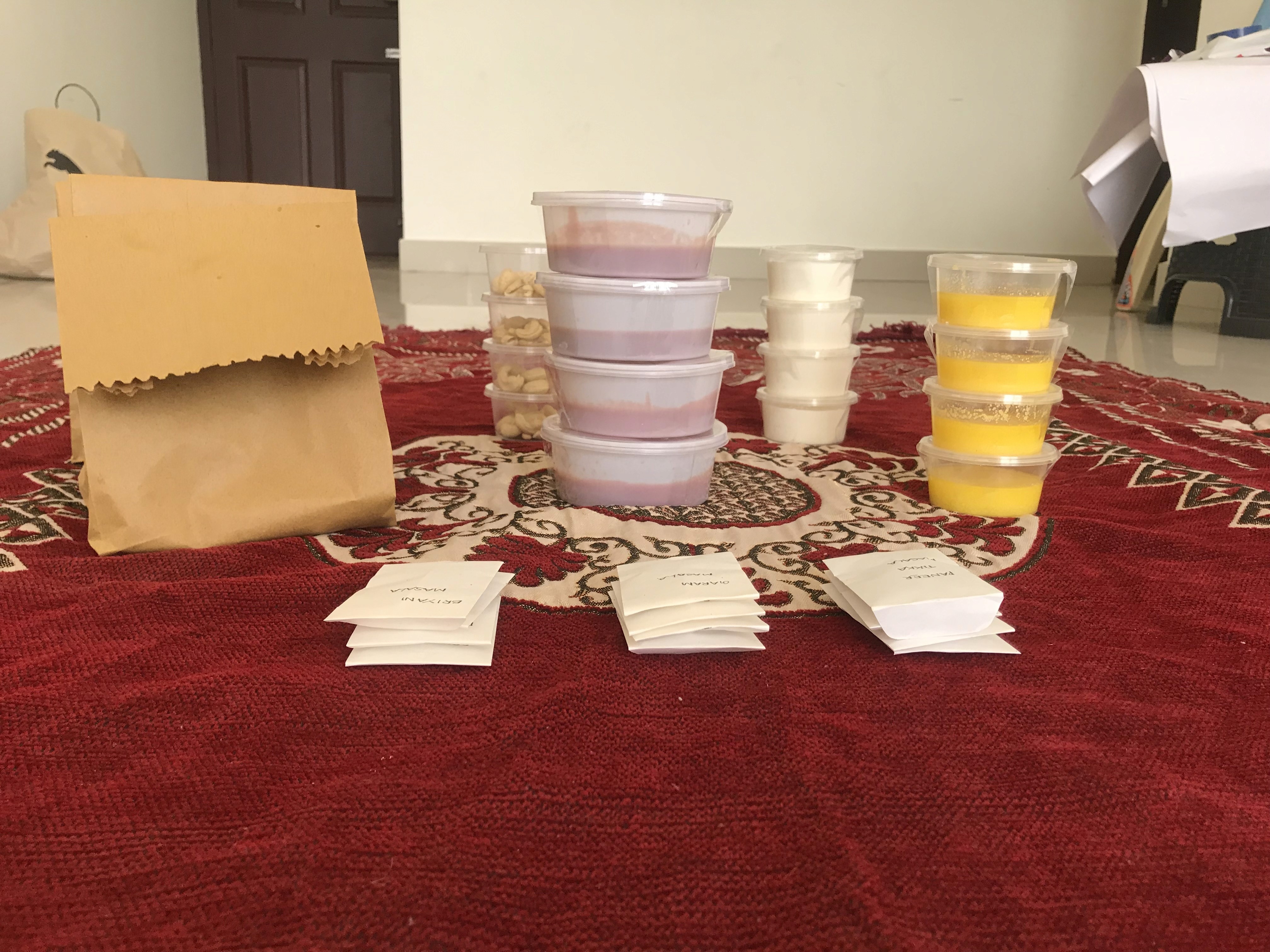
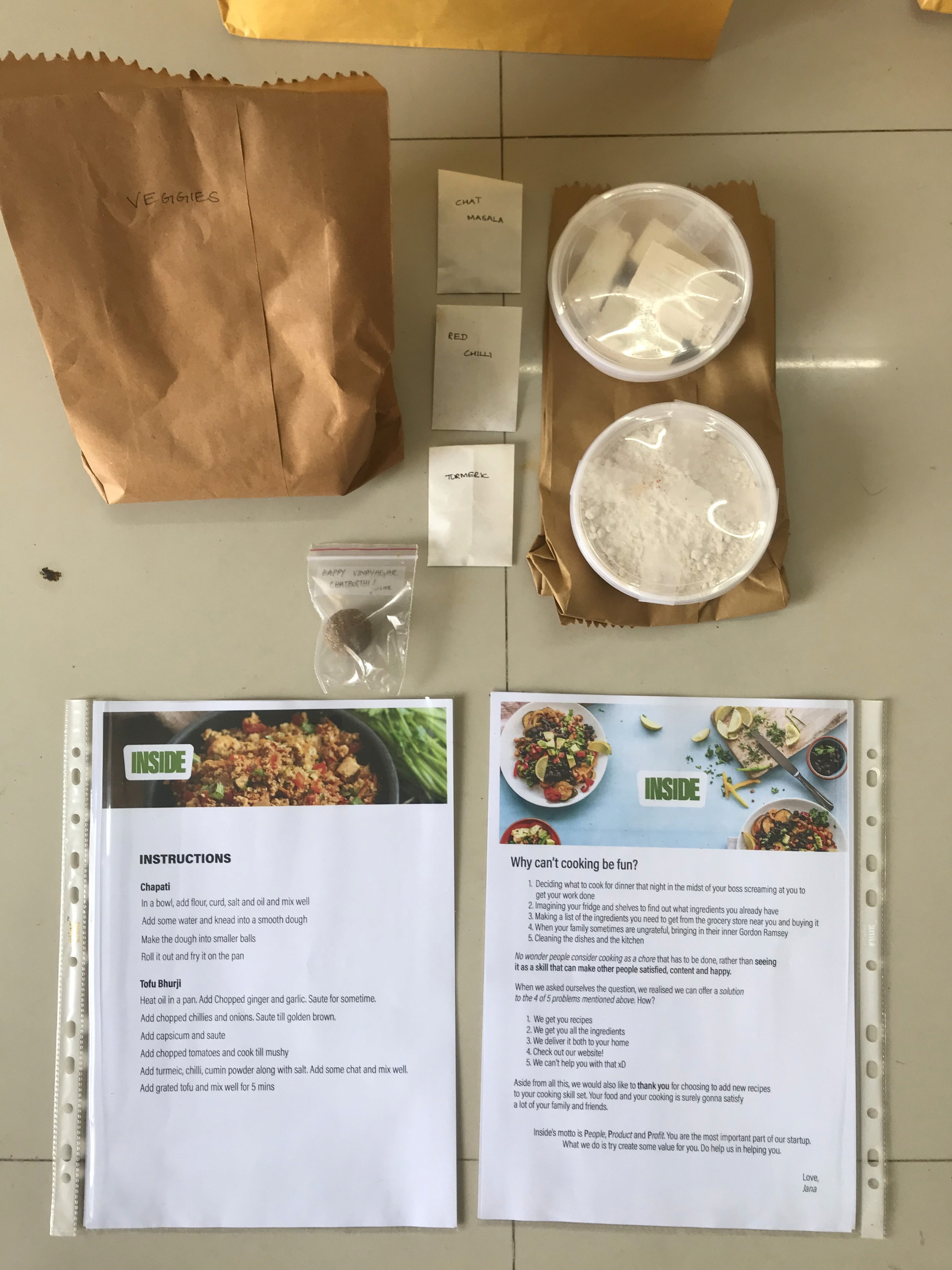
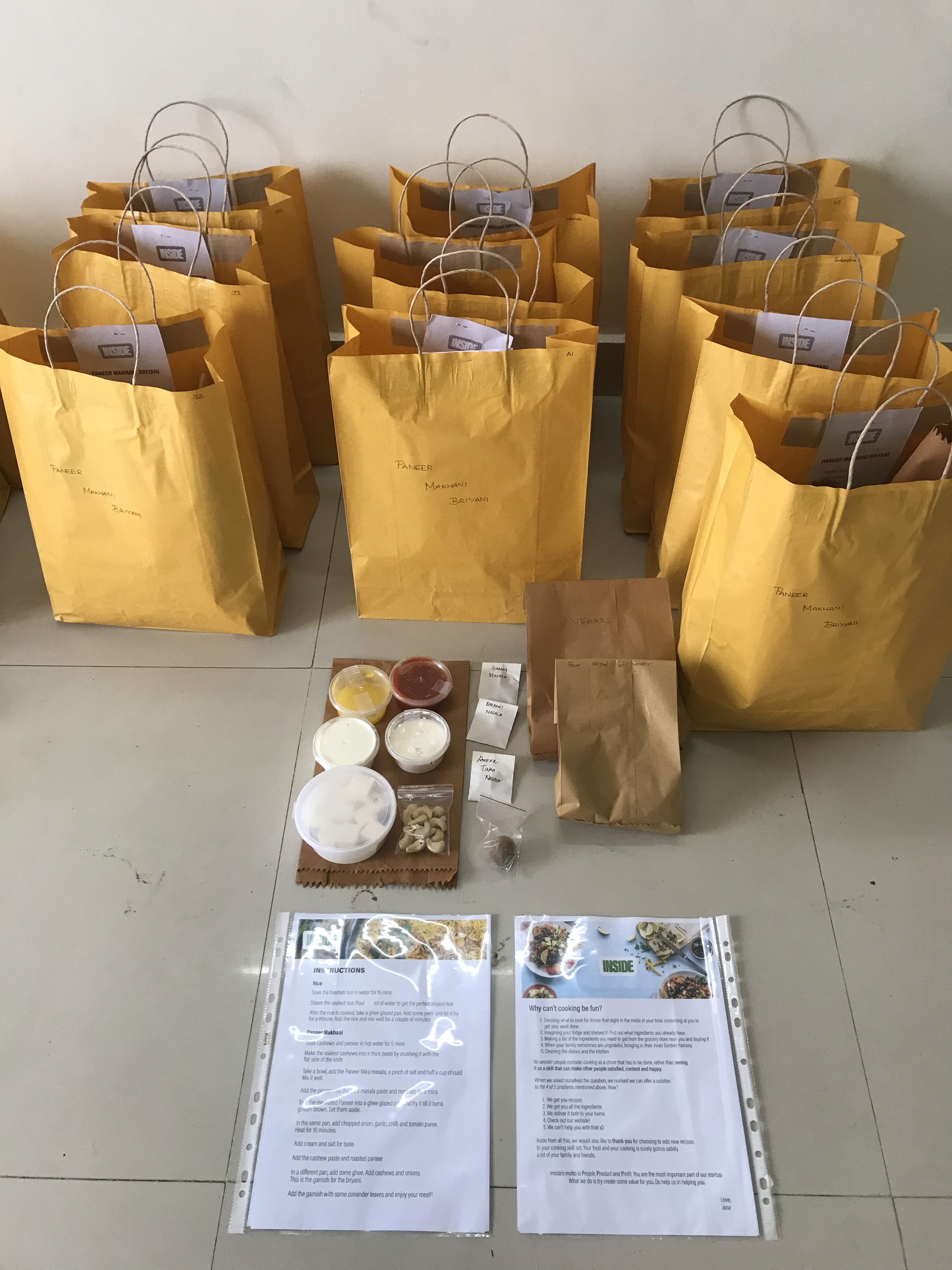
We made the bundles, put them all in my car, and delivered them to all 14 customers with the help of my friend, Nijanth. We repeated the process for 4 weeks with 20 customers on average every week.
Problem
I realized people wanted to buy these “bundles” only on the weekends. Whereas I wanted the number to be 3 times a week.
I attributed this to the cost of each bundle which came to Rs. 250/- for 3 people. And since the customer segment was people who cook regularly, they usually bought most of the groceries in bulk and already had the groceries we delivered.
I decided to switch up the customer persona, deciding to concentrate on bachelors who wanted to cook regularly but needed more help.
Pivot
The pivot lasted less than 2 weeks. On delivering more affordable, one-pot cooking meal kits, the cost still came close to Rs. 100 per meal kit. The bachelors preferred to pay Rs. 50 more and order it on Swiggy or Zomato. I came to another dead-end.
The final pivot
The final pivot came with the following points in mind:
People need to be dependent on the meal kits for their meals
The bundle must be more affordable than their alternative
It should be a high-paying segment
With these pointers in mind, I decided to switch to keto meal kits.
I got 2 customers who paid me Rs. 9000/- per month per head. I with the help of a nutritionist came up with a diet plan. Both the customers lost weight, and neither wanted meal kits again.
Realization
I came to realize the meal kits were a flawed model.
Why?
The value added is that the meal kits help people decide what to cook and get the ingredients to make that particular meal for them. But to get the specific ingredients, there’s a whole other process of repackaging ingredients which requires a ton of manual labor, and with it comes the regulatory issues of handling fresh vegetables.
Then there’s the process of delivering. That’s when I realized that Swiggy is a last-mile delivery startup first, only then a food-delivery startup.
It made no sense to repackage ingredients if I could help people decide what to cook, and help them get the ingredients in bulk, rather than in batches.
Learnings
Talking to users directly >>> Aimless marketing
It’s okay to jump ideas based on user needs when something’s not working
When talking to users, don’t go with a solution, but with an open mind to understand their problems
What next?
Well, the users who wanted the healthy meal-kits wanted me to not give meal-kits, but send cooks to their homes that can cook them their meals.
An aggregator for cooks.
I decided to bite the bait and go on this rabbit hole!